.jpg)


Conceptual Framework

One of the oldest cities on the Black Sea coast, Sinop was named after the goddess Sinope and bears a name that has remained almost the same for centuries and the city has hosted many cultures throughout history within the area it is isolated in.
Sinop was a centre of specialist shipbuilding in the Ottoman period. The city lost its function during the transformation of the empire, and in 1887 the historical dockyards were converted into a prison complex, which meant that
Sinop, the shipbuilding and commercial centre of old, became a prison town and was left in poverty. The geographical position of Sinop, the northernmost city in Anatolia, on a foreland with only a single entry point contributed to the isolation of the city. The oppression of the political authority of the time transformed the city into a veritable “prison town.”
Individuals that were considered to pose “a threat to society,” often guilty of ‘thought crimes’ were incarcerated in Sinop Prison. However, the prison assumed a reverse function and became an environment where serious intellectual work was created. On the other hand, what was produced here supported the emergence of a certain synergy for the city of Sinop and its inhabitants and established its reputation as the dissident city in the history of the Republic.
In the cold war period Sinop became the “big ear” of the USA and was used as the NATO base positioned here to control the USSR, becoming the point where one “bloc,” to which one half of the world was member to, was being checked upon by the “other bloc.” This military base “was placed on a hill dominating the area and established in order to provide a simultaneous monitoring of information and best assessment of intelligence data”, as a concrete implementation of Michel Foucault’s interpretation of the concept “Panopticon*.” The state “turning a deaf ear and a blind eye” based almost the entire economy of the city on revenues from the base. The solitude the city suffered here created awareness in the city’s community regarding the importance of thinking and creating independently.
A reasonable process for new environments and togetherness
Modernist culture and art policies of the central political administration implemented within the framework of modernist policies often triggered the Sinopians’ faculty of thought, engendering the birth of the profile of a contemporary “urbanite,” free of bias and bigotry. Prisoners of thought (writers like Sabahattin Ali and Eşber Yağmurdereli) in prison and their production from the prison, and the popular following of the artistic activities within a central program created the environment for the infrastructure of an educated “new centre” which questioned and demanded.
The thing which developed as a “counter-action” against official authorities who didn’t even consider appreciating the value of the city’s natural and historical wealth, which are laid bare as a treasure in the city centre, was the “thing” one felt to now develop an awareness towards the consumption of culture and art and to preserve them as “values”.
The word defining this condition of obscurity would also define the conceptual structure of the first biennial.
The transformation of the indescribable condition: “şey, -thing”
This entity known as the ‘thing’ contains the endless distance between the known and the unknown, every-thing and no-thing.
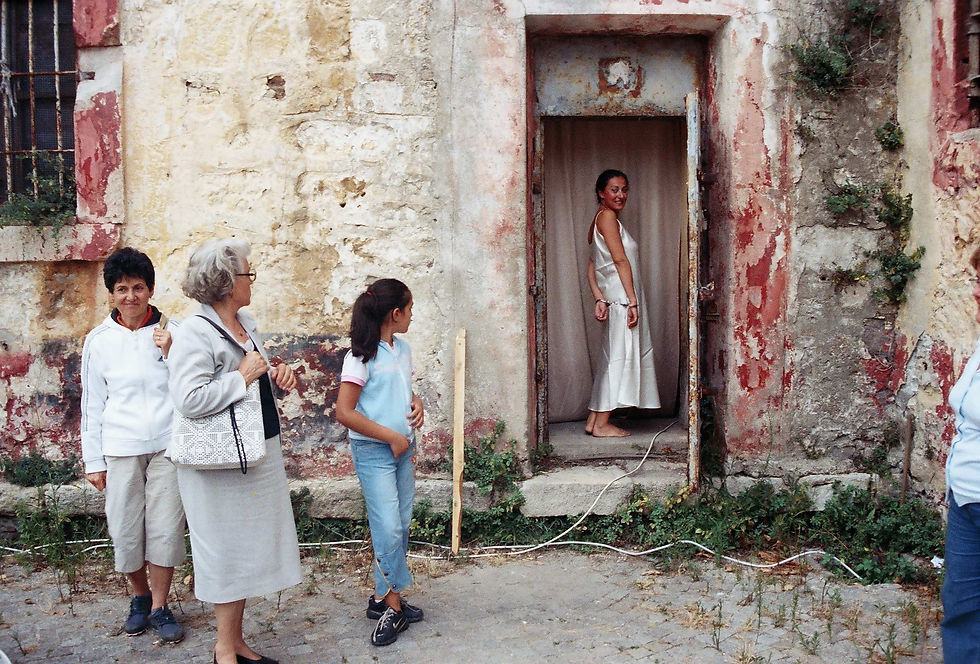
The inevitable reality of being a ‘thing’, our responsibilities and things we turn a blind eye to, the position of things in the face of re-formation and destruction and the gaps in and the naïveté of our actions were discussed from an artistic point of view in the works installed in Sinop Prison which is intensely inhabited by “thing”s.
Sinop has reopened the discussion on its relationship with art in a historical process. This settlement is searching for its codes and recoding itself.
The Relationship between Purpose and Means
The effort shown by many young people to receive art education, the instinct to produce with aesthetic concerns and the historical layers of the city upon which everyday life takes place now mean that the construction of a new structure has begun.
The post-1980s cultural and artistic policies of the state have focused on the private sector; art has been reduced to a marketing tool of the private sector and has become an object of consumption targeting a segmented audience. Cultural and artistic policies devoid of social concerns and focusing only on their economic targets have resulted in the accumulation of culture and art in the centre and isolated cities like Sinop have been completely excluded from the global system. These policies have also resulted in the modernization process in Türkiye being left incomplete without full internalization.
At this point, the following question comes to mind: Can the civil initiative form a new structure by activating local, national and international dynamics? What can the new stance be in the face of the terminated relationship between the centre and the periphery?
“Sinopale” is a structure formed to respond to this question.
Sinop and the Biennial (Sinop+Biennale=Sinopale)
Sinopale has basically been designed as a structure which can develop its own practice within its own area of use. This structure has been constructed to activate civil initiatives in an area where policies do not exist and to create demand regarding the formation of policies.
The main idea of Sinopale develops from the bottom up, and in this context, it transforms local (and regional) thought into an international language and contributes to world culture. This is what renders this type of organization valuable on the international platform.
“Requirements, Obligations, Plans and Results.”
Unlike other biennials, Sinopale has been organized as an art organization that involves the inhabitants of the city in the production process. Sinopale is a civil society activity of an artistic nature.
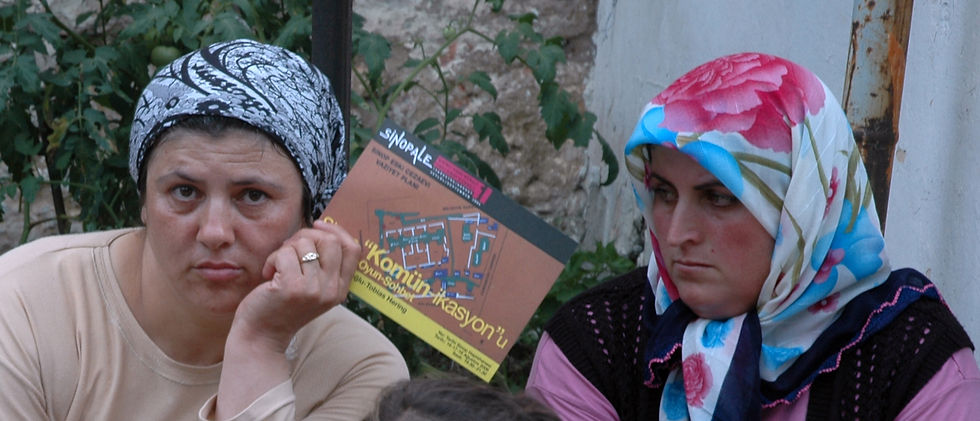
At the first Sinop Biennial artists organized workshops with the participation of the public enabling an expression in an international language for local problems, and also trying to create an awareness of ownership and to attract attention to issues on the international agenda which the local sphere has remained unaware of.
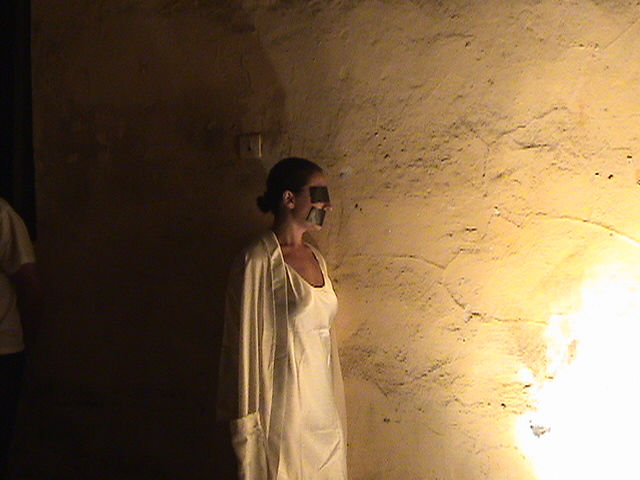
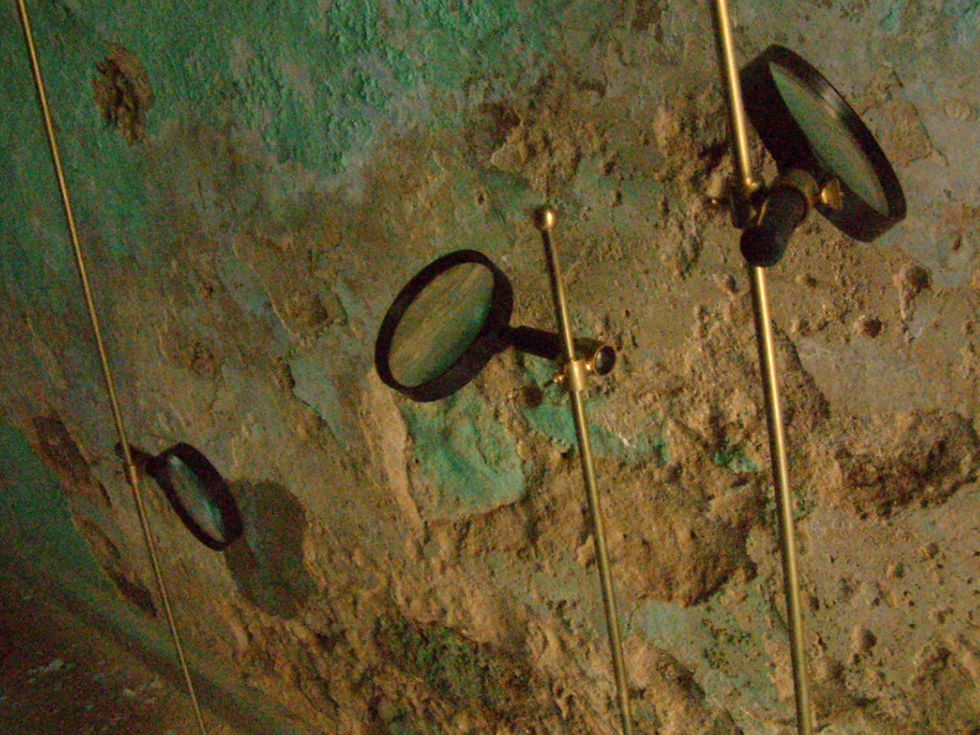
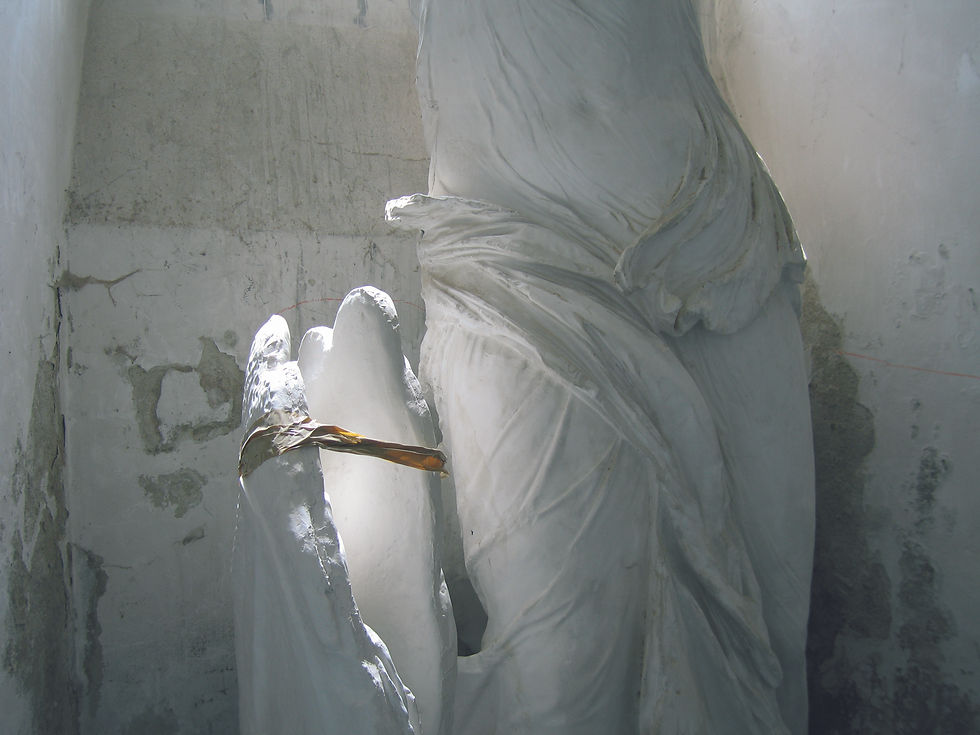
The works of the artists were installed in spaces including the Sinop Prison, the Ethnography Museum and the Seljuk Madrasah according to their preferences. The performance program opened all areas of the city to the artists’ use and works focusing on Sinop were again at the forefront. Interactive works, instrumental in the participation of the local public in artistic production, are important in that they function to accelerate the process of “internalization.”
Sinopale I was a unit of integration with its 3 curators, 60 artists, its organization crew and the 29,000 people of Sinop who made an effort for its success. The people who considered themselves a part of this project at this stage, who came and created, are pioneers who have formed a model for the structures to be formed in years to come.
The Panopticon was originally a prison building with a round-shaped section designed to allow an observer in a central tower to observe all prisoners without the prisoners being able to tell whether they are being watched. Foucault claimed all hierarchical structures like the factory, the school and the hospital were later based on the Panopticon.
Curators
Artists
Alparslan Baloğlu, Andre van Bergen, Antonio Riello, Aylin Kalem, Burcu Yağcioğlu & Ece Kalabak & Nazar Sigaher, Canan Beykal, Ekmel Ertan, Emre Koyuncuoğlu, Eric van Hove, Ferhat Özgür, Gue Schmidt, Handan Börtüçene, İpek Düben, Juliane Stiegele, Jürgen Hefele, Kerem Onur, Lerzan Özer, Marc Rees & Neil Davies, Mohaç Yücel, Monali Meher, monochrom, Murat Özelmas, Nezaket Ekici, Next Future, Nobuho Nagasawa, Orgacom (Nadia Tsulukidze & Sophia Tabatadze), Róza El-Hassan, Suna Suner, Tamas Oszwald, Walter Bergmoser, Yael Davis
Team
Project: T. Melih Görgün
Advisory Board: Beral Madra, M. Mahir Namur, Vittorio Urbani, Zeki Yılmazer
Coordination: Elif Kuli
Assistants: Hikmet Nakilcioğlu, Ufuk Kılıç
Press Relations: Işıl Yenersoy, Nilüfer Sülüner
Corporate Identity: Umut Südüak
Volunteers: Alparslan Karaaslan, Burçak Konukman, Doğa Baş, Emre Yalçın, Erdem Dilbaz, Güngör Erdem, Levent Yılmaz, Orkan Alparslan, Sıtkıcan Saraçoğlu, Zerrin Dirihan
Photography: Zeynep Oray
Thanks to: Ali Yılmaz, Alican Yılmazer, Anıl Başoğlu, Aslan Yılmazer, Aylin Alparslan, Ayşe Şakar, Aytaç Kuaför, Büke Onur, Cankız Onur, Ceren Onur Yücel, Cevat Akkaya, Erdal Yılmazer, Erol Derici, Esra Çıtak Güvenen, Fatoş Yılmazer, Gül Gürses, Gün Önen, Hale Oğuz, İrfan Onur, Mert Güvenen, Nesibe Hanım, Nihat Önder, Orçun Onur, Osman Onur, Ozdemir Korkmaz, Payende Görgün, Recai Yılmaz, Sema Onur Iraktan, Sibel Yılmaz, Ufuk Onur, Zeki Yılmazer
Venues
1. Hotel 117 Construction Site
2. Historical Sinop Prison
3. Old Tekel Building (Old Tabak Building)
4. Pervane Madrasah Handcrafts Bazaar
6. Sinop City Center


Publications
Images












Video
Supporters
REPUBLIC OF TÜRKİYE, GOVERNORSHIP OF SİNOP
SİNOP MUNICIPALITY
REPUBLIC OF TÜRKİYE MINISTRY OF CULTURE AND TOURISM
HALKBANK
SİNOP PROVINCIAL DIRECTORATE OF CULTURE AND TOURISM
AUSTRIAN FEDERAL MINISTRY OF EDUCATION, ARTS AND CULTURE
CONSULATE GENERAL OF THE KINGDOM OF THE NETHERLANDS, ISTANBUL
GOETHE-INSTITUT ANKARA
ROMANIAN CULTURAL INSTITUTE "DIMITRIE CANTEMIR"
BRITISH COUNCIL
PRO HELVETIA
AUSTRIAN CULTURAL FORUM
POLISH ADAM MICKIEWICZ INSTITUTE
DE.MO./MOVIN'UP 2012
SİNOP DR. RIZA NUR PROVINCIAL PUBLIC LIBRARY
PERFETTI VAN MELLE
SİNOP YOUNG BUSINESSMEN'S ASSOCIATION
U.S. EMBASSY, OFFICE OF FOREIGN RELATIONS
BURG GIEBICHENSTEIN UNIVERSITY OF ART AND DESIGN HALLE
BM CONTEMPORARY ART
NUOVA ICONA
SİNOP CHAMBER OF COMMERCE AND INDUSTRY
ARS ELECTRONICA
KUNSTFACTOR
SATELLIETGROEP
AZMİ HAMZAOĞLU
HOTEL 117
ANTİK HOTEL
HOTEL DİYOJEN
HABER ATÖLYESİ
YILMAZER FURNITURE
STS AESTHETIC LASER SYSTEMS
CHAMELEON DESIGN AND PROJECT MANAGEMENT